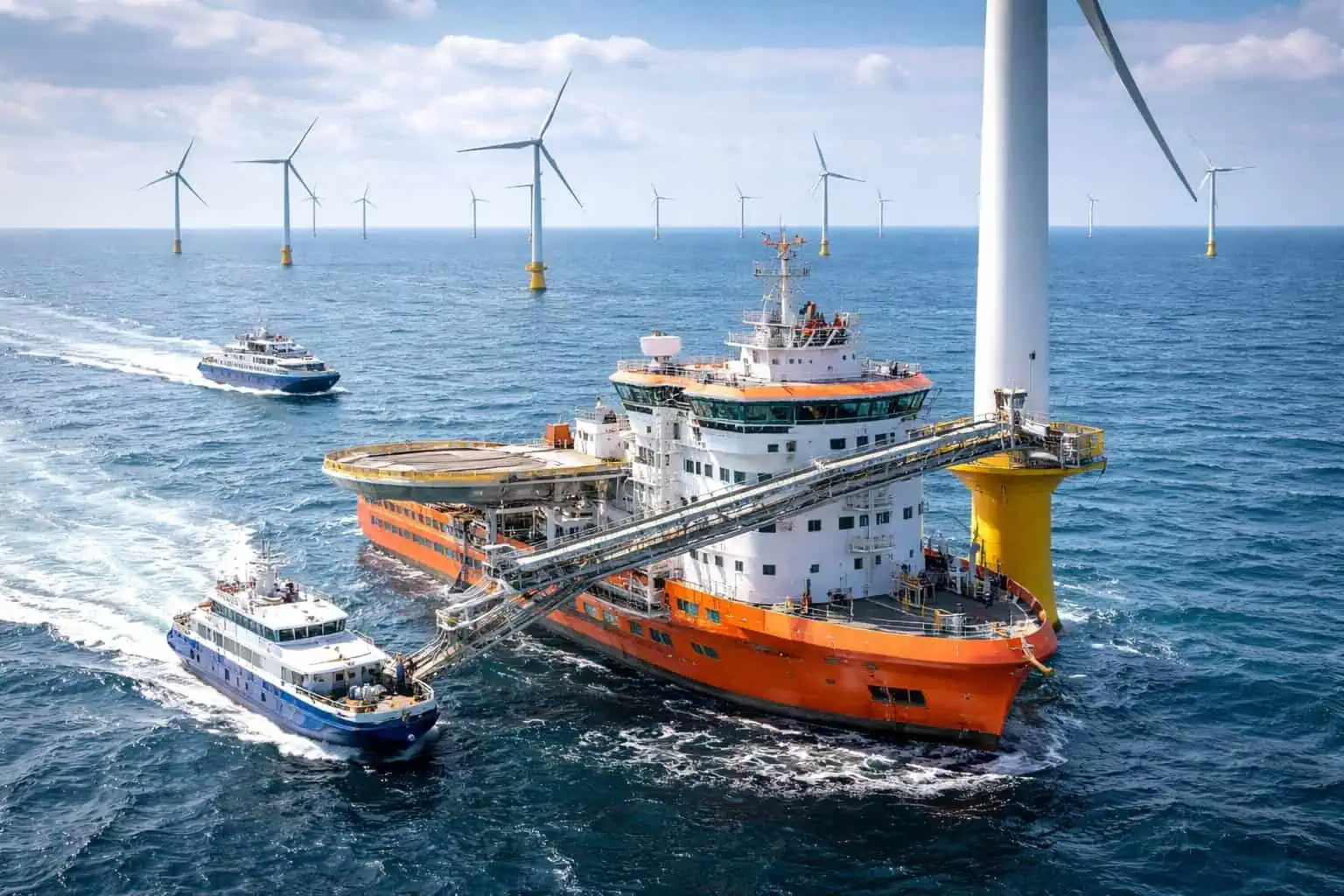
What Is an SOV Vessel? Role, Features, and Offshore Wind Operations

An SOV vessel, or Service Operation Vessel, is a specialized offshore support ship designed to support technicians, maintenance teams, and equipment working on offshore wind farms and other marine energy projects. Unlike vessels that simply transport cargo between port and offshore installations, an SOV vessel is intended to remain offshore for extended periods while serving as a floating base for operations and maintenance. This makes it an important part of modern offshore wind logistics, especially as wind farms move farther from shore.
What Is an SOV Vessel?
An SOV vessel provides accommodation, workshop space, spare-parts storage, transfer systems, and operational support for technicians working on offshore wind turbines. Instead of returning to port every day, the vessel can remain near the wind farm for days or weeks, allowing maintenance teams to respond quickly when work is required.
This operational model reduces transit time and helps offshore wind operators improve turbine availability. Because technicians are based close to the turbines, they can begin maintenance work earlier and spend more productive time offshore.
Why SOV Vessels Are Important for Offshore Wind
As offshore wind farms become larger and more distant from shore, traditional crew transfer vessels may become less efficient. Long daily journeys can reduce the amount of time technicians have available for maintenance and can also increase fatigue.
An SOV vessel solves this problem by acting as a mobile offshore service hub. The vessel carries personnel, tools, consumables, and spare parts close to the turbines. This reduces dependence on shore-based logistics and supports faster response to maintenance requirements.
Walk-to-Work Systems
One of the most important features of an SOV vessel is the walk-to-work gangway. This motion-compensated gangway allows technicians to transfer safely from the vessel to an offshore turbine or platform, even when the sea is moving.
The system uses active or passive compensation technology to reduce the effect of vessel motion. This improves safety and can increase the weather window in which transfers are possible. For offshore wind operators, wider transfer windows can improve maintenance planning and reduce downtime.
Dynamic Positioning and Vessel Control
Many SOV vessels use dynamic positioning systems to maintain a stable position near offshore structures. The system combines sensors, computers, thrusters, and propulsion equipment to keep the vessel in a selected position without anchoring.
Precise position control is essential when technicians are using a gangway or when cargo is being transferred to an offshore structure. The bridge team continuously monitors weather, vessel motion, and equipment performance to maintain a safe working position.
Accommodation and Technician Support
An SOV vessel is also designed around the needs of people who may remain offshore for long periods. Comfortable cabins, dining areas, lounges, medical spaces, gyms, and communication facilities can all be included.
Good accommodation is more than a convenience. Offshore technicians work in demanding conditions, so proper rest helps reduce fatigue and supports safer operations. Vessel designers therefore pay close attention to noise, vibration, lighting, ventilation, and overall habitability.
Workshops, Storage, and Spare Parts
In addition to accommodation, an SOV vessel normally includes workshop areas and storage for tools, components, and spare parts. This allows maintenance teams to prepare equipment onboard and respond quickly to turbine issues.
Deck cranes and cargo-handling systems may be used to move containers, tools, and technical equipment. Efficient internal logistics help ensure that technicians can access the materials they need without unnecessary delays.
Fuel Efficiency and Sustainable SOV Vessel Design
Because offshore wind projects are focused on clean energy, the environmental performance of support vessels has become increasingly important. Modern SOV vessels may use diesel-electric propulsion, battery-hybrid systems, alternative fuels, or optimized hull forms to reduce fuel consumption and emissions.
Some designs also use energy-management software to balance power demand between propulsion, hotel loads, and onboard systems. Reducing unnecessary engine operation can lower both fuel costs and environmental impact.
Read Also: Sofa Cleaning Dubai for Busy Homes That Want Easy and Hassle Free Maintenance
Safety in SOV Vessel Operations
Safety is central to SOV vessel design and operation. Technicians must transfer between moving vessels and offshore structures, so strict procedures, training, and reliable equipment are required. Emergency systems, lifesaving equipment, fire protection, and medical facilities are also important.
Weather monitoring plays a major role in daily planning. If wind, waves, or visibility exceed safe limits, transfer operations may be delayed until conditions improve.
Conclusion
An SOV vessel is a purpose-built offshore service platform that helps wind farm operators maintain turbines efficiently and safely. By combining accommodation, workshops, spare-parts storage, walk-to-work access, and dynamic positioning, the vessel allows technicians to remain close to offshore assets for extended periods. As offshore wind farms continue to expand farther from shore, the SOV vessel is becoming an increasingly important part of reliable and cost-effective offshore energy operations.